





Eye For Film >> Movies >> Unmoored (2023) Film Review


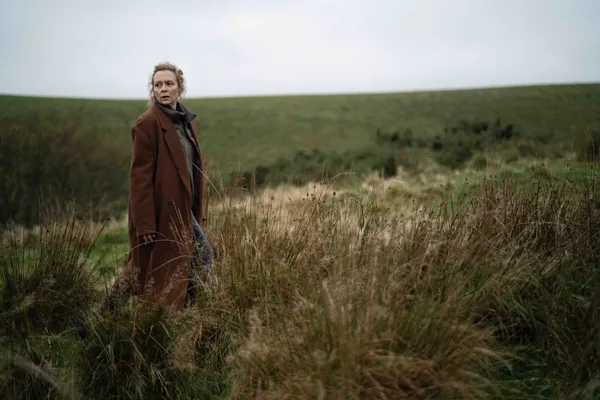

On the television programme that Maria (Mirja Turestedt) presents, a male guest is speaking over his female partner. His body language is intimidating, possessive. Maria can see that the woman isn’t getting to say what she thinks, and eventually she loses her patience and gets blunt about it, talking to the woman afterwards to see if she’s alright. A female member of the production team assures her that she did the right thing. But is it easier to see when something is wrong, and how to do what’s right, from the outside?
When we first meet Maria, she’s being hounded by members of the press because her husband, Magnus (Thomas W Gabrielsson) has been accused of rape. She defends him instinctively. After all, how long has she known him? But perhaps she hasn’t really examined what she knows. It won’t take viewers long to conclude that Magnus is really not a very nice man. He bullies Maria, casually overriding her decisions, making her feel guilty if she doesn’t prioritise his needs. Things come to a head when they visit friends in Poland, where he’s originally from. Magnus makes no secret of his attraction to his old pal’s much younger wife. Maria worries about that age difference, but in conversation the young woman (Marta Zmuda Trzebiatowska) emerges as confident and capable. She flips the question around. Is Maria sure that she’s okay?
On the journey that follows, Maria will make an abrupt decision that reshapes her life.
The bulk of the film concerns itself with the emotional consequences of that decision, and Maria’s efforts to reconcile with the past and reestablish her sense of self. This is where the film excels. Turestedt is excellent and very watchable. Her story is an awkward, disordered one, but appropriately so. We see the fear that continues to haunt her and we witness her efforts to build connections to other people, including Kris Hitchen’s sweet-natured widower, Mark. The script wisely avoids extended passages of direct speech about what she has been through. Instead, we see slow changes in how she carries herself, the manner of her speech, and the way she approaches making decisions. Her sense of oppression does not give way all at once, but gradually feelings of dislocation give way to a sense of freedom.
There are questions here about responsibility and how people reconcile themselves with past decisions which others might see very differently, but these take a back seat in what becomes a fascinating character study. If the tale's original author, Håkan Nesser, intended to inspire a comparison of husband and wife, what we get here is very different, acknowledging a skewed power balance which gives them different considerations and, in Maria's case, notably fewer options.
This is a feature début as director for Caroline Ingvarsson, but she has extensive prior experience in other roles and it shows in a production that is atmospheric and well balanced throughout – at least, all the way up to the unfortunate ending, which packs in an all-too-obvious ‘twist’ and shifts the focus away from the psychological issues that make it interesting. Yes, this is an adaptation of a novel, but it really is okay to cut some things out. It’s far from the conclusive blow that the writers seem to think, but it’s also sufficiently crude that one can’t believe this intelligent heroine wouldn’t have prepared for it. You will enjoy the film a lot more if you leave about eight minutes before the credits start to roll.
Committed as she is, Turestedt does her best even at this stage, which is commendable, but she deserves better. Her delicate evocation of a woman coming to terms with herself makes for compelling viewing and fits perfectly with Ingvarsson’s patient directorial approach in what is otherwise an impressive piece of cinema.
Reviewed on: 15 Aug 2025


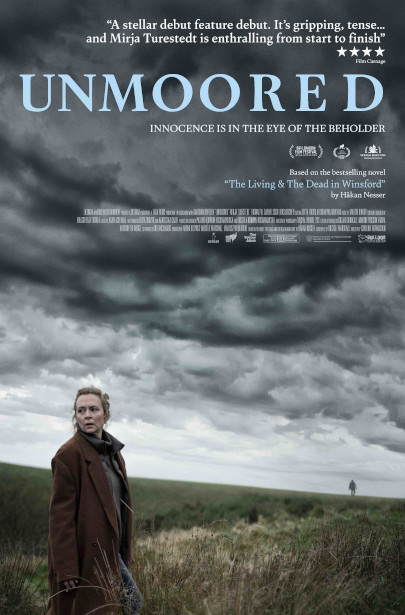

Director: Caroline Ingvarsson
Writer: Michèle Marshall, Håkan Nesser
Starring: Anna Próchniak, Thomas W. Gabrielsson, Mirja Turestedt, Kris Hitchen, Ia Langhammer, Sven Ahlström, Andrzej Konopka, Marta Zmuda Trzebiatowska, Michèle Marshall, David Fukamachi Regnfors, David Bromley, Michal Ochocki, Anna Terpilowska, Tatiana Zlotowicz
Year: 2023
Runtime: 93 minutes
Country: UK
Search database: